Deepin OS 25 is one of the most beautiful and beginner-friendly Linux operating systems available right now. It combines a modern interface, smooth animations, and a Windows-like layout that makes switching from Windows feel comfortable and natural. Whether you’re trying Linux for the first time or looking for a polished alternative to your current OS, Deepin offers a clean and simple experience without sacrificing features.
In this guide, we’ll first take a quick look at what’s new in Deepin OS 25, explore its interface, performance, customization options, and built-in AI features. After that, you’ll get a complete step-by-step installation tutorial — including how to dual boot Deepin alongside Windows safely. Even if you’ve never installed Linux before, you’ll be able to follow along easily.
A First Look at the Deepin OS 25 Desktop
As soon as Deepin OS 25 boots up, the first thing you’ll notice is how clean and modern the desktop looks. The layout feels instantly familiar to Windows users. At the bottom of the screen, you get a dock-style taskbar where you can pin your favorite apps, switch between open windows, and manage notifications.
On the left side of the dock is the launcher button, which works very much like the Windows Start Menu. When you open it, you’ll see all installed applications organized neatly, and there’s a search bar that lets you find apps instantly. The animations are smooth, transitions feel polished, and everything opens quickly without lag — even on mid-range hardware.
Deepin focuses heavily on user experience. There’s no clutter, no confusing menus, and no overwhelming Linux jargon. Everything is designed so beginners can understand it immediately.
Control Center: All Settings in One Place
One of Deepin’s best features is its Control Center. Instead of digging through complex menus like in many Linux distributions, Deepin gives you a unified settings panel that slides in from the side.
From here you can control:
- Wi-Fi and Bluetooth
- Brightness and sound
- Display settings and scaling
- Power options
- Personalization and themes
- Keyboard and region settings
The layout is simple and visually clean. Even if you’ve never used Linux before, it feels intuitive. This is one of the reasons Deepin is often recommended for beginners switching from Windows.
Built-in Apps and App Store
Deepin OS 25 comes ready to use right after installation. You don’t have to spend hours installing basic tools. It already includes:
- A web browser
- Office tools
- Media player
- File manager
- Screenshot and screen recording tools
- System utilities
On top of that, Deepin includes its own App Store. You can search for software, browse categories, and install apps with a single click. Updates are handled through the same interface, making maintenance very easy.
Customization Options in Deepin OS 25
Deepin doesn’t just look good out of the box — it also gives you plenty of customization options so you can make the desktop feel exactly the way you like.
Inside the Personalization section of the Control Center, you can switch between light and dark themes, adjust accent colors, change icon styles, and modify how the dock behaves. You can resize the dock, move it, or switch between efficient and fashion modes depending on whether you want a compact or stylish layout.
Another very useful feature is display scaling and font adjustment. If the text looks too small or too large on your screen, you can fix it in seconds. This is especially helpful for high-resolution monitors and laptops.
The best part is that all these options are presented visually. You don’t need to edit configuration files or use terminal commands. Everything is controlled with simple toggles and sliders.
Built-in AI Assistant (UOS AI)
One of the standout additions in Deepin OS 25 is the built-in AI assistant called UOS AI. It’s integrated directly into the operating system, so you don’t need to install any third-party AI apps separately.
You can open UOS AI from the launcher, and it presents a chat-style interface similar to modern AI tools. On the first launch, the system may show a message saying an AI model needs to be configured — this is completely normal.
You simply go to the configuration section and choose an online model. Deepin provides several options, including trial accounts and API-based models. Once configured, the AI becomes active inside the OS and can assist with everyday tasks.
Having AI built directly into the desktop is a nice touch and shows the direction Deepin is heading — combining modern design with smart system features.
Preparing to Install Deepin OS 25
Now that we’ve looked at the interface and features, let’s move to the installation part. Don’t worry — installing Deepin OS is much easier than most people expect. You don’t need advanced Linux knowledge, and if you follow the steps carefully, the process is very safe.
Before we start, make sure you have a few things ready:
- A USB drive with at least 8GB storage
- A backup of important files (recommended)
- At least 50GB free disk space if you want dual boot
- A stable internet connection for updates after installation
We’ll download the official Deepin ISO file and use a beginner-friendly tool called Ventoy to create a bootable USB.
Step 1: Download the Deepin OS 25 ISO
Open your browser and go to the official Deepin website. Navigate to the download section and download the latest Deepin OS 25 Desktop ISO. The file size is large, so it may take a few minutes depending on your internet speed.
Once the ISO finishes downloading, don’t open it. We’ll use it in the next step to create a bootable USB.
Step 2: Create a Bootable USB with Ventoy
Ventoy is one of the easiest tools for beginners because you don’t need to “flash” the ISO manually.
- Insert your USB drive into the PC
- Open the Ventoy program
- Select your USB drive
- Click Install
⚠️ Ventoy will format the USB, so make sure you backed up your files first.
After Ventoy finishes:
- Open File Explorer
- You’ll see a new Ventoy drive
- Copy the Deepin 25 ISO file into that drive
That’s it. Your bootable Deepin USB is ready.
Step 3: Create Free Space for Deepin (Dual Boot Preparation)
This step is only required if you want to install Deepin alongside Windows in a dual boot setup. If you want to completely replace Windows and install Deepin as your main operating system, you can skip this section and continue to the installation step.
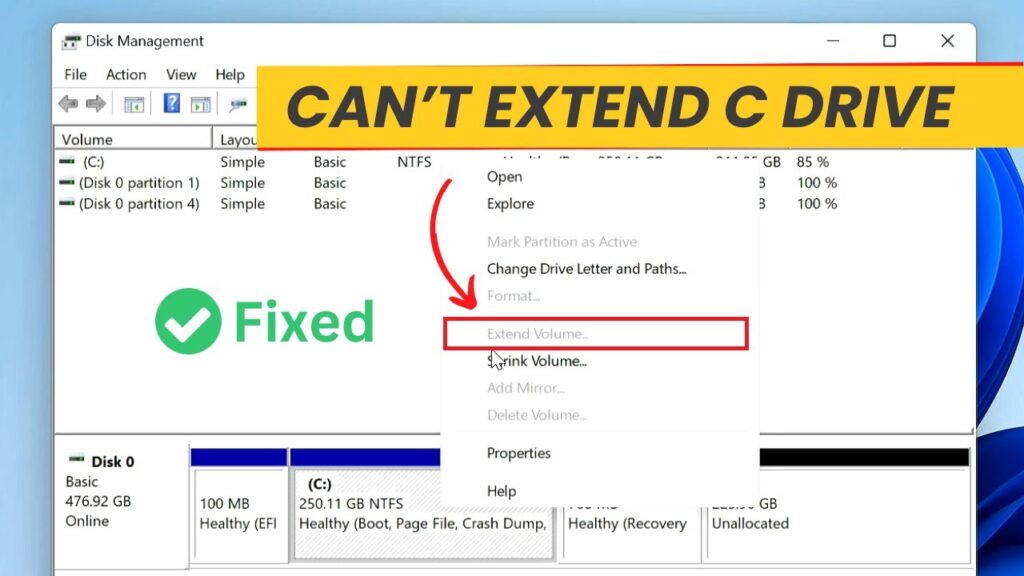
To dual boot, we need to create unallocated space on your drive where Deepin will be installed.
- Right-click the Start button in Windows
- Open Disk Management
- Find your main partition (usually the C: drive)
- Right-click it and select Shrink Volume
Windows will ask how much space you want to shrink.
For Deepin OS, I recommend:
- Minimum: 50GB
- Comfortable: 80–100GB
Enter the amount and click Shrink.
After shrinking, you’ll see a new black section labeled Unallocated Space.
✅ Important rules:
- Do NOT create a new volume
- Do NOT format it in Windows
- Leave it completely unallocated
Deepin will format this space automatically during installation.
Once you see the unallocated space, you’re ready to install.
Step 4: Boot from the USB Drive
Now restart your computer with the Ventoy USB plugged in.
During startup, open your boot menu. The key depends on your PC:
- F12 (most common)
- F9
- ESC
- DEL
Select your USB drive from the boot menu.
You’ll now see the Ventoy screen.
Choose the Deepin 25 ISO and press Enter.
Step 5: Choose the Correct Installation Mode
After booting, Deepin will show a menu with multiple options.
You’ll see:
- Try Deepin Desktop 25 (Live mode)
- Install Deepin 25 with kernel 6.6
- Install Deepin 25 with kernel 6.12
- Installation without graphics driver
For most users, choose:
👉 Install Deepin 25 with kernel 6.6
This is the most stable and compatible option.
Use kernel 6.12 only if you have very new hardware.
If you face black screen or display problems, choose installation without graphics driver.
Press Enter to start the installer.
Step 6: Select Installation Type (Full Disk or Dual Boot)
Once the Deepin installer opens, the first thing it will ask is your language. Select your preferred language and continue.
Next, you’ll see three installation options:
- Full Disk
- Custom
- Advanced
Option A: Full Disk (Erase Everything)
Choose Full Disk only if you want Deepin as your main operating system and don’t need Windows anymore.
⚠️ This option will completely erase the selected drive.
Always double-check the drive name and size before continuing.
If you want dual boot with Windows, do not choose this option.
Option B: Custom (Dual Boot with Windows)
For dual boot, select Custom.
The installer will now show all partitions on your drive.
Find the free space you created earlier in Windows. It will appear as unallocated/free space.
Select that free space.
On the right side, click the plus (+) icon to create partitions.
You’ll now see two sliders:
- System space → where Deepin OS will be installed
- Data space → where your personal files will be stored
Recommended setup:
- System space: 35–40GB minimum
- Data space: remaining space
Make sure the option Format the partition is enabled.
Click Confirm.
Deepin will automatically create all required Linux partitions (Boot, Root, Swap, Data). This is perfect for beginners because you don’t need to manually configure anything.
Once everything looks correct, click Next.
Step 7: NVIDIA Driver Option
Before installation starts, you may see an option:
👉 Install NVIDIA closed source driver
- If your PC has an NVIDIA graphics card → keep this enabled
- If not → uncheck it
Now click Start Installation.
Deepin will begin copying files and installing the system. This process usually takes a few minutes.
Step 8: Reboot and Remove the USB Drive
Once the installation reaches 100%, you’ll see a message saying the installation completed successfully.
Click Reboot Now.
As soon as the computer starts restarting, remove the Ventoy USB drive from your PC.
⚠️ This is important.
If you leave the USB plugged in, the system may boot back into the installer instead of the newly installed Deepin system.
After removing the USB, let the computer boot normally.
Step 9: First Boot Setup
On the first boot, Deepin will guide you through a quick setup wizard.
You’ll be asked to:
- Create a username
- Set your computer name
- Create a password
- Choose language and keyboard layout
- Select your time zone and region
After confirming these settings, you’ll see a screen that says “Configuring your computer.”
This may take a few minutes. Just wait patiently and don’t power off the PC.
Once configuration finishes, Deepin will show the login screen.
Enter your password and log in.
You’ll now arrive at the Deepin OS 25 desktop — fully installed and ready to use.
Step 10: Personalize Your Desktop
The first thing many users do after installation is adjust the display and theme.
Open the Control Center → Personalization and:
- Adjust display scaling if text looks too small
- Change theme (light or dark)
- Resize the dock
- Customize fonts and appearance
This helps make the desktop more comfortable, especially on high-resolution screens.
Step 11: Update the System (Very Important)
Before using Deepin daily, always install updates.
- Connect to Wi-Fi
- Open the update section
- Click Check for Updates
- Download and install available updates
- Reboot when prompted
Updates include security patches, bug fixes, and performance improvements.
After this reboot, your system is fully up to date.
Confirming Dual Boot is Working
After installation and updates, restart your computer one more time to confirm everything is working correctly.
During startup, you should now see a boot menu that includes:
- Deepin 25 Community
- Windows Boot Manager
This means dual boot was set up successfully.
Whenever you want to use Deepin, select Deepin 25 Community.
Whenever you want to return to Windows, select Windows Boot Manager.
You can switch between both operating systems anytime by restarting and choosing from this menu. Nothing is deleted, and both systems stay independent.
Final Thoughts
Deepin OS 25 is one of the best Linux distributions for beginners, especially for users coming from Windows. It combines a modern interface, smooth animations, and a very simple settings experience. You get a polished desktop, a built-in app store, customization options, and even an integrated AI assistant — all without needing advanced Linux knowledge.
The installation process may look long when written step-by-step, but in practice it’s very straightforward. As long as you carefully select the correct partition during setup, everything works smoothly.
If you’ve been curious about Linux but didn’t want something complicated, Deepin OS 25 is a fantastic place to start. It feels familiar, looks premium, and works great for everyday tasks like browsing, media, office work, and development.
Thanks for reading — and welcome to Linux 🚀