Imagine this — your Windows PC suddenly stops booting.
It’s stuck on a blue screen. Automatic repair keeps looping. You forgot the login password. Important files are missing. Or worse — the system is infected with viruses.
Most people panic at this point. Some immediately reinstall Windows and lose their data. Others waste hours searching random fixes on the internet.
But what if I told you that one single USB drive can fix almost all of these problems?
In this guide, I’ll show you how to create a powerful WinPE Sergei Strelec bootable USB — a complete Windows rescue toolkit that every PC technician, IT professional, student, and serious Windows user should have.
This isn’t just a normal recovery disk.
This is an all-in-one Windows repair environment packed with tools for:
- Data backup and recovery
- Partition repair
- Password reset
- Virus removal
- Hardware diagnostics
- Boot repair
- Fresh Windows installation
And the best part? You only need an 8GB pendrive, and it’s completely free.
Let’s get started.
What You Need Before We Begin
Before creating your all-in-one recovery USB, make sure you have the following:
- ✅ A minimum 8GB USB pendrive (16GB recommended for better performance)
- ✅ A working Windows PC to create the bootable USB
- ✅ Internet connection to download the required files
- ✅ 7-Zip or WinRAR to extract the downloaded file
That’s it. You don’t need any advanced technical knowledge. Just follow the steps carefully.
Step 1: Download WinPE Sergei Strelec (English Version)
First, open your browser and go to the official Sergei Strelec website. The website is originally in Russian, so don’t worry if it looks confusing at first.
Right-click anywhere on the page and select Translate to English (if you’re using Chrome or Edge).
From the left-side menu, you’ll see multiple WinPE versions listed.
⚠️ Make sure you select the English (ENG) version. Do NOT download the Russian one unless you specifically want the Russian interface.
On the download page, you’ll see several mirror options such as:
- PixelDrive
- Google Drive
- Mega
You can choose any of them.
Before clicking download, copy the password shown on the page.
You will need this password later to extract the ZIP file.
Now click the download link. The file size is around 3.3GB, so it may take some time depending on your internet speed.
🔥 Download WinPE Sergei Strelec (English)
Once the download is complete, we’ll extract the file and prepare the ISO for creating the bootable USB. Let’s move to the next step.
Step 2: Extract the ZIP File (Using the Password)
Once the download is complete, open your Downloads folder.
You’ll see a large ZIP file (around 3.3GB). This file is password protected, so follow the steps carefully:
- Right-click on the ZIP file
- Select Extract Here (using 7-Zip or WinRAR)
- When prompted, paste the password you copied earlier from the website
- Click OK
The extraction process may take a few minutes.
After extraction, you’ll see a folder containing multiple files.
We don’t need all of them.
Look for the large file with the .ISO extension — this is the main WinPE image file that we will use to create the bootable USB.
You can delete the remaining extra files if you want, but keep the ISO file safe.
Now that we have the ISO ready, the next step is to write it to the USB drive using Rufus.
Step 3: Download Rufus (Bootable USB Tool)
To make the USB bootable, we’ll use Rufus, which is one of the most reliable and trusted tools for creating bootable USB drives.
Open your browser and go to the official Rufus website.
🔥 Download Rufus (Official Website)
Download the latest version. The best part about Rufus is that it doesn’t even require installation. You just open the .exe file and it runs instantly.
Once downloaded, plug in your USB drive and open Rufus.
In the next step, I’ll show you the exact settings you need to use to make this USB compatible with both BIOS and UEFI systems.
Step 4: Create the Bootable USB Using Rufus
Now plug in your 8GB (or larger) USB drive and open Rufus.
You’ll see a simple interface. Follow these exact settings carefully:
1️⃣ Select Your USB Device
Under Device, choose your connected USB drive.
⚠️ Make sure you select the correct USB, because it will be completely erased.
2️⃣ Select the ISO File
Click on Select and browse to the folder where you extracted the Strelec files.
Choose the WinPE Sergei Strelec ISO file.
Once selected, Rufus will automatically load the image.
3️⃣ Enable BIOS + UEFI Support (Important Step)
Now press Alt + E on your keyboard.
This enables support for both Legacy BIOS and UEFI systems, meaning this one USB will work on:
- Old PCs
- New laptops
- Custom-built desktops
- Most modern Windows machines
This is what makes it truly universal.
4️⃣ Start the Process
Now click Start.
You’ll see a warning that all data on the USB will be destroyed.
Click OK to continue.
Wait for the process to complete. It may take several minutes depending on your USB speed.
Once finished, your All-in-One Windows Recovery USB is ready.
⚠️ Important: Secure Boot Warning
On some newer systems, if Secure Boot is enabled, the USB may not boot.
If that happens:
- Enter BIOS/UEFI settings
- Temporarily disable Secure Boot
- Boot from the USB
- After you finish your repair work, you can enable Secure Boot again
Other than that, this USB will work on almost any Windows PC.
Now that the bootable USB is ready, let’s boot into it and see what this powerful tool can actually do.
Step 5: Boot Into WinPE Sergei Strelec
Now take the USB drive and plug it into the PC or laptop that you want to repair.
Restart the system.
As soon as the computer starts turning on, press the Boot Menu key repeatedly.
The key depends on your device brand. Common keys include:
- F12 (Dell, Lenovo, many desktops)
- F9 (HP)
- F10
- Esc
- F2
If you’re not sure, you can quickly search:
“Boot menu key for your laptop model”.
Once the boot menu appears:
- Select your USB drive
- Press Enter
Choose the Right Strelec Environment
After booting from the USB, you’ll see the Windows Boot Manager screen.
You’ll get multiple options like:
- WinPE 11 Sergei Strelec
- WinPE 10 Sergei Strelec
👉 For modern systems (Windows 11 / newer hardware), choose WinPE 11 (Recommended).
👉 For older hardware, choose WinPE 10.
Select the appropriate version and press Enter.
Now wait a few moments while the recovery environment loads.
Welcome to the WinPE Desktop
After loading, you’ll see a Windows-like desktop interface.
It looks very similar to normal Windows — with a taskbar, Start button, file explorer, and icons.
But remember:
👉 This is NOT your installed Windows.
👉 It’s a portable recovery environment running completely from the USB.
That means:
- Your internal Windows installation is not active
- Viruses are not running
- System files are not locked
- You can safely access and repair the system
To access all tools:
Click Start → Programs → WinPE
Everything is neatly organized into categories like:
- Backup & Restore
- Hard Disk & Partition
- Diagnostic
- Windows Recovery
- Data Recovery
- Password Reset
- Antivirus
- Windows Installation
Now let me explain how I personally use this USB in real-world repair situations, so you understand exactly when and why to use each tool.
Real-World Repair Scenarios (How I Actually Use This USB)
Now let’s talk practical situations. These are real examples where this USB becomes a lifesaver.
🔹 Scenario 1: Laptop Stuck in Blue Screen or Boot Loop
A client brings you a laptop that keeps showing:
- Blue Screen of Death
- Automatic Repair loop
- “Windows couldn’t start properly”
And the user is worried because all their important files are inside.
👉 First Step: Backup the Data
Before trying any risky repair, I always secure the data.
Go to:
Start → Programs → WinPE → Backup & Restore
Use tools like:
- AOMEI Backupper
- Macrium Reflect
From there:
- Open the internal drive
- Go to
C:\Users\Username\ - Copy folders like:
- Desktop
- Documents
- Downloads
- Save everything to an external hard drive
✅ Now the data is safe.
Only after that do I attempt repairs.
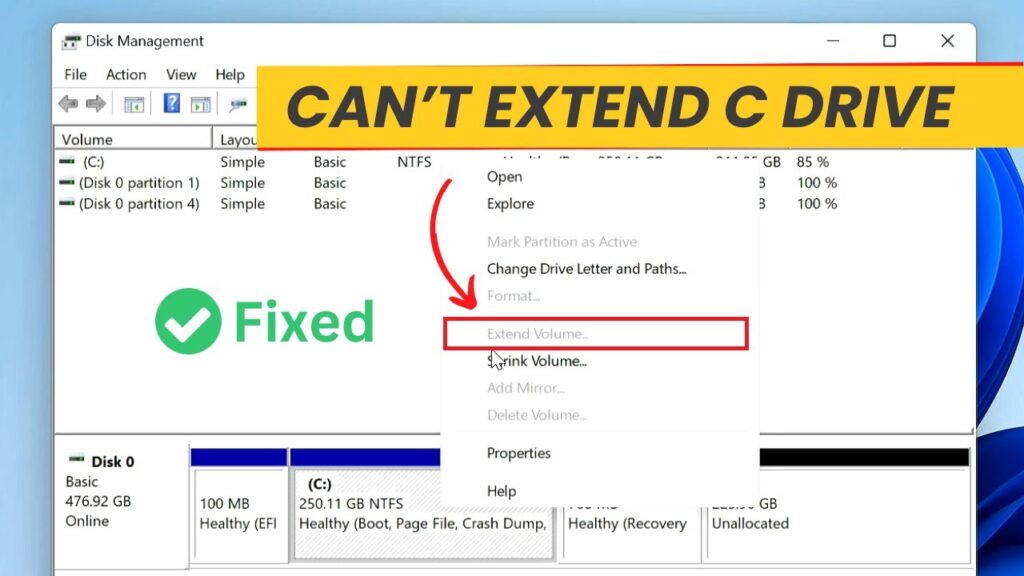
🔹 Scenario 2: Partition or Disk Problem
Sometimes Windows fails because:
- The C drive is full
- Partitions are corrupted
- Unallocated space exists
- Boot partition is damaged
Go to:
Hard Disk & Partition
Use tools like:
- DiskGenius
- MiniTool Partition Wizard
- EaseUS Partition Master
From here, you can:
- Resize partitions
- Repair damaged partitions
- Recover missing partitions
- Convert MBR ↔ GPT
- Fix disk structure issues
All without booting into Windows.
🔹 Scenario 3: Check SSD / HDD Health
Many people try reinstalling Windows without realizing the real issue is failing hardware.
Go to:
Diagnostic Tools
Use:
- CrystalDiskInfo
- Hard Disk Sentinel
These tools show:
- SSD/HDD health percentage
- Temperature
- Bad sectors
- SMART status
If health is below 50–60%, replacing the drive is the real solution.
You can also use:
- AIDA64
- HWiNFO
To check:
- CPU details
- RAM status
- Full hardware information
This helps confirm whether the issue is software or hardware.
🔹 Scenario 4: Windows Is Corrupted (Boot Repair)
If hardware looks fine, but Windows won’t start:
Go to:
Windows Recovery & Boot Repair
Here you can:
- Repair BCD (Boot Configuration Data)
- Use Windows Recovery Environment
- Run deep system repair tools
- Fix bootloader problems
Many boot loop and startup errors get fixed here — without reinstalling Windows.
🔹 Scenario 5: Install Windows Without Another USB
If Windows is beyond repair:
Instead of creating another Windows bootable USB, use:
Windows Installation Tools → WinNTSetup
You can:
- Mount a Windows ISO
- Install Windows directly to the SSD
- Complete installation from the same Strelec USB
This saves time and keeps everything in one place.
Now let’s move to even more powerful features like password reset, virus removal, and deleted file recovery — because this USB can handle those too.
🔹 Scenario 6: Forgot Windows Login Password
This is one of the most common problems.
A user calls and says:
“I forgot my Windows password. I can’t log in.”
Instead of reinstalling Windows and losing everything, just boot into the Strelec USB.
Go to:
Start → Programs → WinPE → Password Reset
You’ll find tools like:
- Reset Windows Password
- Simplex Password Reset
Using these tools, you can:
- Remove the local account password
- Reset the password
- Enable disabled accounts
Within minutes, you can reboot the system and log in without being asked for the old password.
⚠️ Important: Only use this on systems you own or have permission to repair.
🔹 Scenario 7: Recover Deleted Files or Lost Partitions
Sometimes the problem isn’t boot failure — it’s accidental deletion.
Maybe:
- Important documents were deleted
- The recycle bin was emptied
- A partition disappeared
- Someone formatted the wrong drive
Because WinPE runs outside of Windows, recovery success is often much higher.
Go to:
Data Recovery Section
Use tools like:
- Active Partition Recovery
- Other file recovery utilities included in the toolkit
You can:
- Scan deleted partitions
- Recover formatted drives
- Restore deleted files
And since Windows isn’t running, the drive isn’t actively being overwritten — which improves recovery chances.
🔹 Scenario 8: Virus-Infected System (Offline Scanning)
If a system is extremely slow or infected with malware, antivirus inside Windows may not work properly.
Why?
Because malware runs in the background and can block removal.
Instead, boot into Strelec USB.
Go to:
Antivirus Section
Use offline scanners like:
- Kaspersky Virus Removal Tool
- Dr.Web CureIt
Since Windows isn’t running, viruses are inactive.
This makes removal much more effective.
🔹 Scenario 9: Securely Wipe Drive Before Selling PC
If a laptop is being sold or given away, normal formatting is not safe.
Deleted data can still be recovered using recovery software.
Instead:
Go to Formatting / Wipe Tools
Use:
- Active KillDisk
This permanently wipes the drive so that data cannot be recovered.
Perfect for:
- Selling a PC
- Donating a laptop
- Disposing of old drives
Why Every Technician Should Have This USB
You don’t need to memorize every tool inside it.
Just remember this:
Whenever something goes wrong with Windows, boot this USB first.
From:
- Data backup
- Disk repair
- Hardware diagnostics
- Windows recovery
- Password reset
- Virus removal
- File recovery
- Fresh Windows installation
Everything is in one place.
Whether you’re:
- An IT technician
- A computer repair professional
- A student
- Or just a serious Windows user
This single USB can save you hours of work — and sometimes even save your data.
If you found this guide helpful, make sure to bookmark it and share it with anyone who works with computers.
I’ll also be creating separate detailed guides on individual tools inside this USB — step-by-step real-world usage.
Stay tuned, and I’ll see you in the next guide.